best tracker

Top Ad 728x90

samedi 17 octobre 2026

Obama Goes After Trump Again After Key Elections Called…see more

by


Former President Barack Obama and President Donald Trump escalated their public feud this week after opposition candidate Peter Magyar won Hungary’s election, defeating the administration-backed incumbent.

Trump had sent Vice President JD Vance to Hungary before the election to support then-Prime Minister Victor Orban, who has governed the country for 16 years. Magyar’s victory prompted Obama to post on social media celebrating what he called a win for democracy across Europe and the world.

Obama’s Statement

“The victory of the opposition in Hungary yesterday, like the Polish election in 2023, is a victory for democracy, not just in Europe but around the world. Most of all, it’s a testament to the resilience and determination of the Hungarian people,” Obama wrote on X, adding that the result served as a reminder to pursue fairness, equality and the rule of law.

Trump’s Iran Deal Counterattack

Trump responded by pivoting to criticisms of Obama’s 2015 Iran nuclear agreement, which he terminated during his first term. At the FII PRIORITY Summit on Friday, Trump rehashed his objection to a $1.7 billion payment made to Iran under the deal’s framework.

“That Barack Hussein Obama, he had the Iran nuclear deal. He went to Iran, he paid them,” Trump said. “He sent two Boeing 757 jetliners. They took the seats out and they piled it with cash, like 1.7 billion of cash.”

Trump claimed that without terminating the Iran nuclear deal in his first term, Iran would have already obtained nuclear weapons. “If I didn’t terminate it almost immediately, they would have had a nuclear weapon long ago, and they would have used it on the Middle East, Israel,” he stated.

Context of the Payments

Obama’s administration justified the $1.7 billion transfer as compensation owed to Iran following a failed 1979 arms deal dispute that preceded the Islamic Revolution. The payment was part of the broader nuclear agreement designed to limit Iran’s nuclear program in exchange for sanctions relief.

Trump and War Secretary Pete Hegseth have alleged the funds enabled Iran to finance military activities and obtain ballistic missiles used to target American and allied installations in the Middle East.

The United States and Israel are currently in the fourth week of Operation Epic Fury, an initiative Trump claims targets Iran’s military capabilities following assertions that Tehran is rebuilding its nuclear weapons program.

FBI Provides Updates On Mysterious Deaths of Scientists

by


The FBI is investigating a pattern of deaths and disappearances among scientists connected to U.S. aerospace and defense programs following a congressional inquiry into potential national security threats.

At least 11 researchers tied to NASA, SpaceX, and Blue Origin have died or gone missing since 2022. The House Oversight Committee requested briefings from federal agencies this week, with a deadline of April 27 for responses.

Congressional Pressure Mounts

House Oversight Committee Chairman James Comer sent letters Monday to FBI Director Kash Patel and NASA Administrator Jared Isaacman demanding information about the cases. “If the reports are accurate, these deaths and disappearances may represent a grave threat to U.S. national security and to U.S. personnel with access to scientific secrets,” the committee stated in its letters.

Comer, a Kentucky Republican, told reporters the pattern did not appear random. “Once you see the facts, it would suggest that something sinister could be happening and it would be a national security concern,” he said.

White House and Administration Response

White House press secretary Karoline Leavitt formally acknowledged the pattern on April 15, saying the administration would examine the cases. “If true, of course, that’s definitely something I think this government and administration would deem worth looking into,” she said.

President Trump told reporters the same day he expected answers within “the next week and a half,” describing the matter as “pretty serious stuff.” Leavitt later confirmed the administration was “actively working with all relevant agencies and the FBI to holistically review all of the cases together.”

FBI Investigation Details

FBI Director Kash Patel told Fox News on Sunday the bureau would examine potential connections to classified information access and foreign involvement. “If there’s any connections that lead to nefarious conduct or conspiracy, this FBI will make the appropriate arrest,” Patel said.

The FBI stated it is “spearheading the effort to look for connections into the missing and deceased scientists” while coordinating with the Department of Energy, Department of Defense, and state and local law enforcement partners.

Scientific Fields Involved

Many deceased or missing individuals worked in specialized areas including asteroid tracking, deflection modeling, and space-based detection systems. These fields involve small communities of experts, according to analysts.

Blue Origin’s 2026 NEO Hunter concept, developed with NASA’s Jet Propulsion Laboratory and Caltech, represents one initiative in planetary defense involving ion-beam deflection and kinetic impact technologies.

Agency Positions

NASA said it is cooperating with relevant agencies but noted that “nothing related to NASA indicates a national security threat” at this time.

Dolly Parton’s Cause Of Death Revealed…#

by


Country music legend Dolly Parton, whose seven-decade career made her one of America’s most recognizable entertainers, has died at age 80 in Nashville.

Parton passed away peacefully at her home in Tennessee on Tuesday, according to her representatives. Her death sparked immediate tributes from musicians, public figures and fans worldwide.

Health Struggles Before Death

Parton was hospitalized at Vanderbilt University Medical Center on Friday, August 21, days before her passing. TMZ reported, citing sources, that she received treatment for kidney and autoimmune conditions, though neither has been officially confirmed as a cause of death.

In an interview on her hospitalization day, Parton acknowledged ongoing health issues. “As I’ve shared in video messages throughout the past year, I am dealing with some health issues that I just didn’t pay attention to when I was watching over Carl,” she told PEOPLE magazine, referring to her husband.

Parton’s health challenges intensified following Carl Dean’s death in March 2025 at age 82, after nearly 60 years of marriage. Earlier this month, she missed a Dollywood event due to dizziness and dehydration, addressing attendees through a prerecorded video.

A Legacy Spanning Decades

Born in Tennessee in 1946 as one of 12 children, Parton rose from poverty in the Great Smoky Mountains to achieve global prominence. Her music catalog included “Jolene,” “Coat of Many Colors,” “9 to 5” and “I Will Always Love You.”

Beyond music, Parton worked as an actress, businesswoman and philanthropist. She founded the Imagination Library in 1995, a literacy initiative that has distributed hundreds of millions of free books to children worldwide.

Final Projects and Legacy

Despite her recent setbacks, Parton remained committed to ongoing work. “Even though I’m still healin’, I’m still workin’!” she said in one of her final public statements, noting multiple projects she aimed to complete.

Parton’s family announced plans for a small private service for immediate relatives. Her official cause of death remains undisclosed.

Jennifer Hegseth Emerges as Influential Figure in Defense Secretary’s Inner Circle

by


Jennifer Hegseth, wife of Defense Secretary Pete Hegseth, has emerged as an influential figure in his professional inner circle, attending sensitive meetings and helping prepare him for high-profile appearances, drawing fresh questions about appropriate boundaries in Pentagon operations.

Sources say Jennifer Hegseth has accompanied her husband to meetings with journalists and government officials. Her involvement has extended beyond traditional political spouse responsibilities, according to accounts from former administration officials.

What Happened

Jennifer Hegseth attended a sensitive U.S.-U.K. meeting involving military intelligence sharing related to Ukraine, according to reports. British officials reportedly limited the level of detail discussed during that session due to concerns about her presence, with a more detailed follow-up meeting held without her later.

Former Pentagon spokesperson John Ullyot, who left his position after roughly three months, publicly criticized her involvement. “I was interviewed by her for approximately 40 minutes and questioned why a defense secretary’s spouse would participate in sensitive official matters,” Ullyot said in accounts cited by media outlets.

The Pentagon’s Response

The Pentagon dismissed Ullyot’s criticism, defending the administration’s conduct regarding Jennifer Hegseth’s access to meetings. Officials have pushed back against suggestions that her presence compromised security protocols or information handling.

Neither the administration nor outside critics have established that Jennifer Hegseth improperly disclosed classified information. The reported meetings have nevertheless prompted scrutiny of how the Defense Department manages sensitive discussions and participant access.

Broader Questions at Stake

The controversy raises fundamental questions about access, confidentiality and accountability within senior government offices. Cabinet officials routinely rely on trusted advisers and family members, but national security responsibilities impose additional expectations regarding sensitive information handling.

Pete Hegseth has previously spoken publicly about his recovery from past struggles with alcohol, crediting his faith and his wife with supporting him through difficult periods. He has referred to Jennifer and Jesus as his “two Js,” describing them as central influences in his life.

Supporters may view Jennifer Hegseth’s close involvement as an expression of personal trust and mutual support. Critics, however, have questioned whether such a role is appropriate when sensitive government responsibilities are involved.

The Pentagon’s handling of who participates in sensitive discussions is likely to remain under examination as the debate continues about the extent of Jennifer Hegseth’s official involvement and safeguards surrounding Pentagon operations.


Reported Iran-Linked Threats Against Barron Trump Raise Fresh Security Concerns

by

Foreign media reports claim Iran-linked outlets have distributed threatening material referencing Barron Trump, the 20-year-old son of President Trump, though the authenticity of some circulating content has not been independently verified.

The reported threats target a member of the Trump family amid escalating tensions between the United States and Iran. Such hostile rhetoric has previously been directed at President Trump and First Lady Melania Trump through channels attributed to Iranian sources.

What the Reports Claim

Reports indicate that Tasnim News Agency, an Iranian outlet with reported ties to Iran’s Islamic Revolutionary Guard Corps, circulated a video containing violent rhetoric. The material allegedly referenced the First Lady and locations associated with her public appearances, according to foreign media accounts.

The video reportedly included a threatening reference to Barron Trump, according to the same reports. However, the full context and authenticity of material spreading online have not been independently established by CNN.

Security Response and Measures

The U.S. Secret Service, which protects the president and his immediate family, regularly evaluates potential threats against its protectees. The agency maintains extensive security arrangements for the president’s family, particularly at locations connected to the administration.

Barron and Melania Trump both receive Secret Service protection. Officials have released limited information about any investigations related to the reported material, though authorities are expected to continue monitoring potential threats.

Broader Context

Security specialists note that threatening propaganda can serve multiple purposes, including intimidation and psychological warfare. Assessing individual threats requires careful evaluation to determine whether they contain credible information or indicate a specific security risk.

The reported developments occur against a backdrop of heightened U.S.-Iran tensions and increasingly aggressive rhetoric from Iranian officials and state-affiliated media. Even uncertain online claims may prompt security agencies to examine material and determine whether additional precautions are necessary.

Remembering a Life Through a 1931 to 2026 Portrait and the Passage of Time

by


A black and white portrait showing an elderly man between the years 1931 and 2026 raises questions about how a lifetime is remembered and what gets lost when a life is reduced to dates.

The image contains only a face and two numbers spanning nearly a century. No name, occupation, or personal details accompany the photograph, leaving viewers to contemplate what those years actually contained.

A World Transformed

Someone born in 1931 entered a world without televisions in most homes, commercial aviation, or pocket-sized devices. He would have witnessed technology evolve from mechanical and visible systems into constant digital presence woven throughout daily life.

The same 95 years encompassed wars, economic shifts, medical breakthroughs, and cultural transformations. Communication changed from letters taking weeks to instant messages delivered seconds later. Music moved from radios and records to streams accessible anywhere.

Yet personal memory rarely centers on these large shifts. Instead, lives are defined by smaller moments: a parent’s voice, a first shared home, a child asleep on a shoulder, an argument later regretted, or a familiar seat at dinner.

What Numbers Cannot Hold

A photograph preserves appearance, but the people who lived beside this man would remember his movement, habits, humor, worries, and kindnesses-details no camera captures.

Time also feels uneven across a lifetime. Childhood summers stretch endlessly while later decades pass quickly. Ninety-five years lived moment to moment differs fundamentally from ninety-five years as a single line.

When someone dies, the official record shrinks while the family’s emotional world expands. Documents list names, dates, and relationships. Those who remain carry phrases repeated often, recipes never measured, stories told many times, and the sudden instinct to call before remembering there will be no answer.

A Mirror for Recognition

Looking at an unfamiliar face, viewers often think about their own parents, grandparents, and friends. The portrait becomes a reflection of fear that an entire inner world can be reduced to a few lines.

It also expresses hope that love preserves something richer than official records. Most human value emerges quietly through presence, kept promises, teaching, listening, caring, and returning to the same people year after year. Those acts seldom appear in historical timelines but form the stories families repeat.

Between 1931 and 2026 stood a person who saw the world reinvent itself while living through intimate details common to every generation. The dates mark arrival and departure. They do not contain him.

Strait of Hormuz Takes Center Stage as U.S.-Iran Confrontation Mounts…#

by


The United States and Iran face mounting tensions over the Strait of Hormuz, a critical shipping corridor that has become a flashpoint as military operations, economic sanctions and diplomatic stalemate collide.

The waterway serves as a major route for global energy shipments, and recent confrontations between U.S. and Iranian forces have severely disrupted commercial traffic. Reuters reported that average daily vessel traffic fell to its lowest level since May following attacks near the strait, as tensions over maritime control intensify between Washington and Tehran.

What Happened

Military clashes between U.S. and Iranian forces have escalated in recent days, with strikes targeting Iranian positions and retaliatory attacks in response. Incidents involving both commercial and military vessels near the Strait of Hormuz have raised safety concerns for international shipping operations.

Iran’s crude oil exports through the strait have been severely restricted, with Reuters reporting roughly seven weeks without meaningful shipments. The disruption reflects the broader economic and military pressure Washington has applied through sanctions and naval operations.

Diplomatic Efforts Stall

Diplomatic negotiations between the United States and Iran have produced limited progress despite ongoing contacts. U.S. Energy Secretary Chris Wright said Sunday that Washington might not reach a new nuclear agreement with Tehran under current circumstances, describing negotiations as stalled.

Previous discussions between Iran and Oman had explored arrangements to restore predictable maritime traffic through the strait. However, broader disputes over Iran’s nuclear program, sanctions relief and shipping security remain unresolved.

Economic Pressure Intensifies

The Trump administration has escalated its economic campaign against Iran through expanded sanctions and naval blockade measures. Iranian officials have acknowledged growing economic difficulties, including foreign currency shortages, declining imports and rising prices.

Uncertainty over shipping through the Strait of Hormuz has contributed to volatility in global energy markets, extending the economic impact beyond Iran. The disruption affects energy prices and supply chains worldwide as regional tensions persist.

What This Means

The confrontation remains unresolved, with no confirmed comprehensive agreement between Washington and Tehran in sight. Military and economic pressure continues alongside diplomatic contacts, though a durable settlement requires difficult negotiations on security, nuclear restrictions, sanctions and freedom of navigation.

The path forward remains uncertain as tensions continue to shape the region and influence global energy markets.

NEW UPDATE on Nancy Guthrie. At least three people…

by

A major development came on the night of February 13, when multiple agencies—including SWAT teams and forensic units—executed a search warrant at a property

located roughly two miles from Guthrie’s home. The operation, which extended overnight, led to the temporary detention of three individuals and the seizure of a silver or gray Range Rover for examination.

Despite the scale of the response, officials clarified that the action was part of an ongoing investigation rather than a confirmed breakthrough. All individuals detained during the operation were later released, and no arrests have been made. Authorities emphasized that the search was driven by investigative leads that required follow-up, not by definitive evidence linking those individuals to the disappearance.

Several pieces of evidence continue to shape the direction of the case. Investigators reported finding drops of Guthrie’s blood inside her home, along with signs suggesting unusual or suspicious activity. In addition, both her doorbell camera and pacemaker monitoring system were disconnected around the time she went missing, raising further concerns about the circumstances.

Authorities have also identified an unknown male individual from surveillance footage and are analyzing DNA evidence that does not match Guthrie or her immediate contacts. These elements suggest the involvement of someone outside her known circle, though no suspect has been formally identified.

Complicating the situation further are reports of alleged ransom messages requesting cryptocurrency. Officials have not confirmed whether these messages are authentic or directly connected to the case, and they remain part of the broader investigation.

As the search continues into its third week, the reward for information has increased, and authorities are urging the public to come forward with any relevant details, including footage or observations that could assist investigators.

Family members, including her daughter Savannah Guthrie, have continued to appeal for information while expressing hope for her safe return. For investigators, the focus remains on gathering evidence, analyzing leads, and maintaining coordinated efforts across agencies.

At this stage, the case remains unresolved, with key questions still unanswered. Authorities continue to stress that public cooperation may play a crucial role in advancing the investigation and bringing clarity to what happened.

JUST IN: Nancy Guthrie, 84, Savannah Guthrie’s mother, has been found…

by

TUCSON, Ariz. — The disappearance of Nancy Guthrie, the 84-year-old mother of Today show co-host Savannah Guthrie, remains unresolved as investigators continue examining evidence, reviewing surveillance footage and appealing to the public for information that could help determine what happened to her.

The case has attracted widespread attention because of Nancy’s age, the circumstances surrounding her disappearance and the public profile of her daughter. For the Guthrie family, however, the investigation has become a deeply personal ordeal marked by uncertainty, public speculation and an ongoing search for answers.

Authorities have said that members of Nancy’s family—including her children, siblings and their spouses—have been cleared as suspects. Investigators have emphasized that the relatives are considered victims in the case and have cooperated with law enforcement throughout the investigation.

The clarification came after online rumors and public speculation focused attention on the family. Officials have urged people not to draw conclusions from unverified claims, stressing that the investigation must be guided by evidence rather than social-media theories.

Investigators Examine Surveillance Footage

One of the central pieces of evidence is reportedly doorbell-camera footage recorded near Nancy Guthrie’s home around the time she disappeared. Investigators have been examining images of a masked individual who was allegedly seen in the area.

Authorities have asked residents to review their own security-camera recordings for suspicious activity, unfamiliar vehicles or individuals who may have traveled through the neighborhood before or after Nancy was last seen.

Investigators are particularly interested in establishing a clear timeline of events. That includes determining when Nancy was last known to be at home, identifying any visitors or vehicles in the area and tracing possible movements connected to the disappearance.

Officials have not publicly identified a suspect or announced an arrest. The person seen in surveillance footage remains a focus of the investigation, but authorities have cautioned that the available images do not, by themselves, establish who was responsible.

Forensic Evidence Offers Possible Leads

A glove discovered several miles from Nancy’s residence has also drawn attention. Investigators reportedly examined the item because it appeared potentially consistent with clothing or equipment visible in surveillance footage.

The glove was submitted for forensic testing, including DNA analysis. However, authorities have indicated that at least some of the testing produced information that did not immediately identify a person connected to Nancy’s disappearance.

Such developments illustrate the challenges investigators face in a case involving limited physical evidence. DNA or other forensic material may provide a lead, but investigators must determine when and how the material was deposited, whether it is connected to the crime and whether it can be reliably matched to a relevant individual.

Law enforcement has continued to examine additional evidence recovered from Nancy’s property and the surrounding area. Officials have not disclosed every detail, citing the need to protect the integrity of the investigation.

Reward Increased as Search Continues

Authorities have increased the reward for information that leads to Nancy’s safe location or helps secure an arrest and conviction in connection with her disappearance. The reward is intended to encourage witnesses to share information that might otherwise remain undisclosed.

Investigators have stressed that even seemingly minor details could prove important. A vehicle observed at an unusual time, a person seen walking through the area or footage captured by a private security camera could help establish a missing part of the timeline.

The FBI and local law enforcement agencies continue to encourage anyone with relevant information to contact investigators directly. Officials have warned the public against spreading rumors or interfering with the investigation.

Family Appeals for Information

Savannah Guthrie and other members of the family have faced the disappearance under intense public scrutiny. Savannah has made emotional appeals for information and has continued to express hope that her mother will be found.

The family has also had to respond to speculation while navigating the uncertainty of an investigation that has yet to produce a definitive answer. Authorities have repeatedly stated that relatives are not suspects and have cooperated with investigators.

Despite surveillance footage, forensic testing and continuing investigative efforts, Nancy Guthrie’s whereabouts remain unknown. The case remains active, and authorities are seeking information that could clarify the events surrounding her disappearance.

For the Guthrie family, every unanswered question represents another day of uncertainty. For investigators, the priority remains locating Nancy, establishing what happened and determining whether someone can be held responsible.

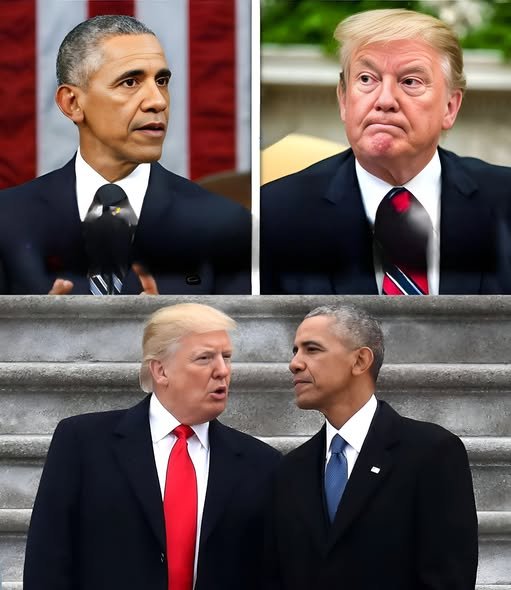
Trump and Obama Clash Live on Air: A Historic Moment in Political Discourse

by

In a recent televised interview, former President Donald Trump directed a series of remarks toward former President Barack Obama, drawing national attention and sparking intense debate across social media platforms. While political commentary often includes disagreement and critique, the nature of this exchange has been described by some observers as unusually direct, highlighting both the evolving landscape of media and the enduring public fascination with political personalities.

This incident provides a lens into modern political communication, media dynamics, and public reaction, emphasizing how live broadcasts can rapidly amplify statements and shape public discourse.

The Live Broadcast
The exchange occurred during a nationally televised interview on a major cable network. Trump, addressing a variety of topics ranging from policy disagreements to perceived personal slights, included commentary about Obama’s presidency that many viewers interpreted as unusually confrontational.

Observers noted several elements that contributed to the viral nature of the broadcast:

Timing: The remarks were delivered live, leaving no opportunity for editorial moderation.
Language: The comments included pointed critiques that strayed from traditional diplomatic rhetoric.
Audience Reaction: Social media immediately amplified the exchange, generating thousands of posts, memes, and commentary within minutes.
Historical Context
The interaction between Trump and Obama must be understood in the broader context of their political histories.

Barack Obama’s Presidency (2009–2017): Obama’s tenure focused on healthcare reform, economic recovery, and foreign policy challenges. His administration often faced criticism from opposing political parties but also maintained a significant international profile.
Donald Trump’s Presidency (2017–2021): Trump emphasized America-first policies, deregulation, and unconventional communication strategies, particularly through social media channels. His administration frequently critiqued previous government policies, including those enacted during Obama’s term.
Given this backdrop, live criticism of a former president carries both political weight and symbolic significance, reflecting long-standing partisan divisions.

Social Media Response
Within minutes of the broadcast, social media platforms experienced an explosion of activity:

Twitter and X: Thousands of posts shared clips, quotes, and commentary, with hashtags trending nationwide.
Facebook and Instagram: Users debated the appropriateness of the remarks, sharing memes, opinion pieces, and analytical posts.
News Outlets: Both national and international media outlets reported on the incident, analyzing potential political motivations and implications.
Analysts note that live televised statements now interact with digital media instantaneously, creating feedback loops that can magnify controversy beyond traditional expectations.

Expert Analysis
Political communication experts emphasize several points regarding the broadcast:

Impact on Public Perception: Statements made during live interviews often carry more weight because they are unedited and perceived as “authentic.”
Strategic Communication: For politicians, live remarks can be a deliberate strategy to rally supporters, signal discontent, or dominate media cycles.
Polarization Effects: Such exchanges can deepen political polarization, with audiences interpreting statements based on pre-existing affiliations.
Dr. Laura Mitchell, a political communication scholar, explained:

“Live televised interactions between former presidents are rare and significant. They not only inform public perception but also shape historical narratives about leadership, media strategy, and political discourse.”

Public Reactions
Public reactions were mixed, reflecting both political allegiance and media literacy.

Supporters of Trump: Many applauded the remarks as a candid critique of Obama’s administration, interpreting them as honest and unfiltered commentary.
Critics of Trump: Others expressed concern over the tone, viewing the remarks as unnecessarily personal and indicative of broader trends in political incivility.
Neutral Observers: Some commentators focused less on partisanship and more on the media dynamics, noting how live remarks are amplified disproportionately in a 24-hour news cycle.
Community forums and opinion polls conducted in the hours following the broadcast revealed that reactions often depended on political alignment, age group, and news consumption habits.

Media and Ethical Considerations
Live broadcasts create unique ethical and professional challenges for media organizations.

Real-Time Editing Limitations: Live coverage limits the ability to edit or contextualize statements before they reach the public.
Audience Sensitivity: Networks must balance the public’s right to information with potential harm from incendiary statements.
Fact-Checking: Rapid social media dissemination can outpace traditional fact-checking, leading to misinformation or incomplete understanding.
Journalists involved in the broadcast noted that extensive preparation and careful moderation are crucial to ensure professional standards while respecting freedom of speech.

Historical Comparisons
Historically, live exchanges between prominent political figures have occasionally sparked controversy, though few have matched the immediacy and virality of the modern media environment:

1960 Kennedy-Nixon Debates: These debates demonstrated the importance of visual media and live performance in shaping public opinion.
1988 Reagan-Dukakis: Televised moments, such as emotional expressions or missteps, influenced voter perceptions in real time.
Early 21st Century Media Interactions: Live town halls and interviews have increasingly combined traditional television coverage with real-time online discussion, magnifying public reactions.
Implications for Political Discourse
This incident illustrates broader trends in modern politics:

Increased Visibility: Politicians’ statements are instantly recorded, shared, and analyzed globally.
Strategic Controversy: Live remarks can be used to dominate news cycles, often benefiting from media attention regardless of public opinion.
Polarization: Direct verbal confrontations may energize core supporters but can alienate moderate or undecided voters.
Experts warn that while dramatic moments attract attention, long-term political influence is determined by policy outcomes, credibility, and the ability to navigate both media scrutiny and governance challenges.

Balancing Free Speech and Civility
Political leaders face the challenge of balancing unfiltered expression with the expectations of civility in public discourse. While freedom of speech is fundamental, public figures are also held to high standards due to their influence on national and international audiences.

Civic Responsibility: Comments made during live broadcasts can shape social attitudes, reinforce stereotypes, or inflame tensions.
Media Literacy: Audiences are encouraged to critically evaluate statements, cross-reference sources, and distinguish between opinion and factual reporting.
Educational initiatives in schools and community programs increasingly include media literacy training, helping citizens navigate live broadcasts, social media amplification, and political commentary responsibly.

Conclusion
The live exchange between Donald Trump and Barack Obama represents a significant moment in modern political communication, illustrating the power of live broadcasts, the speed of digital amplification, and the enduring fascination with public figures. While some viewers celebrated the candid critique, others expressed concern over tone and civility.

Regardless of perspective, this incident underscores several truths about contemporary politics:

Live statements are amplified in ways that previous generations could not have anticipated.
Public reactions are shaped as much by social media dynamics as by the content of the remarks themselves.
Understanding political discourse requires both critical thinking and awareness of historical and media contexts.
As the story continues to unfold in social media feeds, news cycles, and public conversation, it serves as a reminder of the complex interplay between politics, media, and public perception. Future analysis will likely consider this broadcast a case study in communication, polarization, and the evolving expectations of leaders in the digital age.

By approaching incidents like these with thoughtful analysis and measured discussion, audiences can gain perspective while participating in civic dialogue that is both informed and respectful.

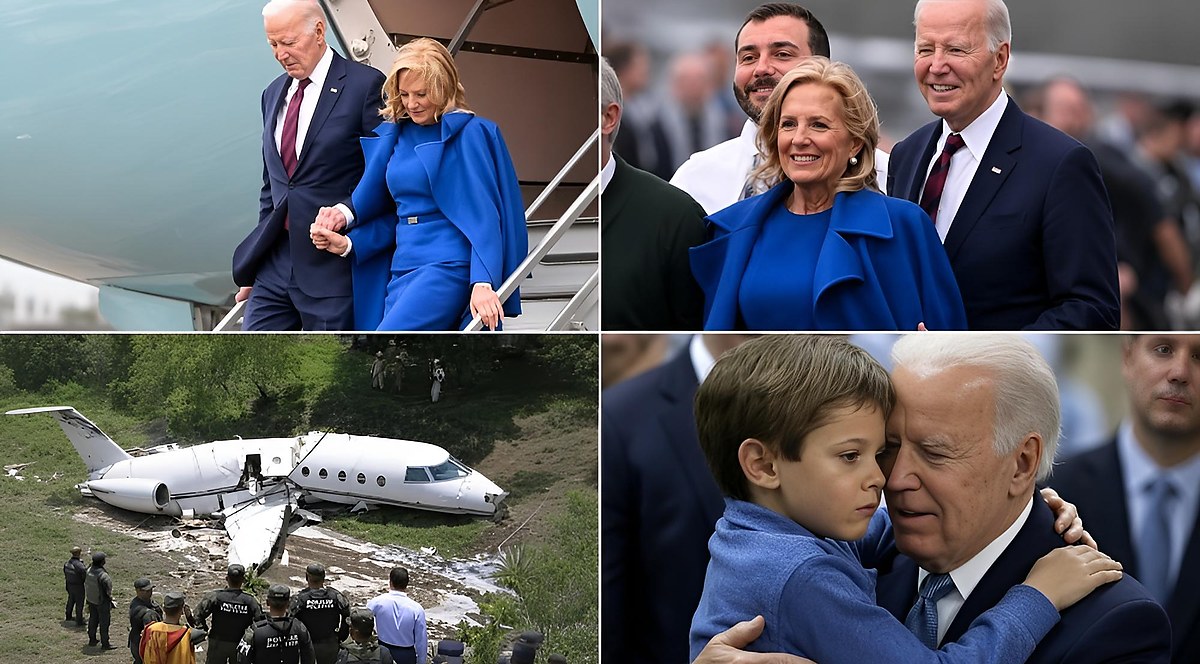
“Fox News” Former US President Joe Biden, wife and grand son, perish in plane crash, few minutes ago, along the Canadia

by

Viral “Fox News” Claim Says Joe Biden, Jill Biden and Grandson Died in Plane Crash: What We Know A dramatic claim circulating online says that former U.S. President Joe Biden, his wife Jill Biden and one of their grandchildren have died in a plane crash near the Canadian border.

Instead, the claim appears to be circulating through social media…

The post is written in the style of a breaking-news alert and begins with language such as “Just In” and “Fox News,” followed by the claim that the former president and members of his family “perish” in a plane crash.

The wording is designed to create an immediate sense of urgency. But there is a major problem with the story: There is no credible evidence currently confirming that Joe Biden, Jill Biden or a Biden grandchild died in such a crash.

A search of current reporting does not produce a credible Fox News report, government announcement, aviation authority statement or major news report confirming the alleged deaths.

Instead, the claim appears to be circulating through social media, where posts can be copied and reshared thousands of times before anyone verifies whether the underlying story is genuine.

That distinction is extremely important when the claim concerns the death of a former president and members of his family.

The Claim Spreads Online The wording of the viral post is particularly striking.

Canadian authorities would also be expected to provide information if…

It presents itself as a breaking-news announcement and attributes the information to Fox News. A Facebook post currently visible in search results repeats essentially the same claim, stating that former President Joe Biden, his wife and his grandson supposedly died in a plane crash “few minutes ago” near Canada.

But a social-media post saying that Fox News reported something is not the same thing as an actual Fox News report.

This is one of the most important lessons for readers navigating breaking news online.

Anyone can write “Fox News says” at the beginning of a Facebook post.

That does not mean Fox News actually published the story

That does not mean Fox News actually published the story.

For an extraordinary claim involving a former president, credible confirmation would normally be expected from multiple major news organizations and official sources.

That confirmation is absent here. Why the Claim Is So Serious False reports about celebrity deaths are unfortunately common.

False reports about political figures can be even more consequential.

A former U.S. president remains a major public figure whose death would generate enormous national and international coverage.

That makes independent verification even more important

If Joe Biden had actually died in an aircraft accident, the story would not remain confined to an obscure social-media post.

Major American television networks would be reporting it.

International news organizations would be reporting it.

Government officials and political figures would be issuing statements.

News agencies would be distributing alerts.

The Federal Aviation Administration and the National Transportation Safety Board could potentially become involved if the incident occurred within U.S. jurisdiction or involved U.S. aviation interests.

Canadian authorities would also be expected to provide information if the crash occurred in Canada or near Canadian territory.

The complete absence of such corroboration is a major warning sign.

The “Just Minutes Ago” Formula Another suspicious element is the phrase “few minutes ago.”

This wording is frequently used in viral misinformation.

It creates pressure.

The reader is encouraged to share the post immediately rather than stopping to verify it.

The implication is:

You need to tell everyone before they hear it somewhere else.

That psychological effect is powerful.

When people believe information is brand new, they may be less likely to question it.

But the age of a social-media post does not establish the truth of the claim inside it.

What Would Happen If a Former President Actually Died? The…

A post can be published five minutes ago and still contain a completely fabricated story.

Likewise, an old photograph can be reposted today and falsely described as evidence of a new event.

The timestamp tells you when the post appeared

The timestamp tells you when the post appeared.

It does not tell you when the alleged event happened—or whether it happened at all.

What Current Reporting Actually Shows Current reporting about Joe Biden does not support the crash claim.

Recent coverage has focused on Biden’s health and other developments concerning the former president.

For example, reporting published earlier this month discussed comments by Hunter Biden concerning his father’s prostate cancer. The report described the cancer as having spread and noted that a Biden spokesman declined to comment on the interview.

Other recent Biden coverage has concerned matters unrelated to any aircraft accident. The Guardian’s current Biden coverage includes stories from July 2026 about a forthcoming presidential memoir and other political developments involving the former president.

None of this supports the claim that Biden has died in a plane crash.

What About Jill Biden? The viral claim specifically includes Jill Biden.

That makes independent verification even more important.

And fifth, the reader may be emotionally shocked

Jill Biden, the former first lady, is a highly recognizable public figure.

A fatal aviation accident involving both Joe and Jill Biden would be one of the most significant U.S. news stories of the year.

It would not reasonably be expected to appear only as an unattributed social-media message.

Major news organizations would have extensive coverage.

Official statements would be expected.

Family representatives would likely issue information.

None of that has been found to substantiate the viral allegation.

What About the Grandson? The claim also says that a grandson was aboard the aircraft.

Again, no credible evidence has been presented establishing the identity of the alleged passenger, the aircraft, the flight route, the location of the supposed crash or the circumstances of the accident.

Those omissions are significant.

A genuine aviation disaster report would normally contain at least some basic information:

The aircraft type The flight or registration information The departure and destination locations The approximate crash location The number of people aboard Emergency-response information Statements from aviation or law-enforcement authorities The viral claim provides none of those essential details.

Instead, it relies on the names of famous people to…

It uses dramatic language instead of verifiable facts

Instead, it relies on the names of famous people to make the story appear credible.

Why Using “Fox News” Makes the Post Look Convincing Attributing a claim to a recognizable news organization is a common misinformation technique.

The strategy is simple.

A reader sees the words “Fox News.”

The reader recognizes the name.

The reader assumes that a major news organization has verified the information.

But the actual source may be a random social-media account.

This is why readers should never rely solely on an attribution inside a post.

If a post says:

“Fox News just reported…”

go directly to Fox News and search for the story.

If it isn’t there, that is an immediate reason for caution.

The same principle applies to CNN, NBC News, ABC News, CBS News, Reuters, AP and every other major news organization.

A logo or name can be copied.

A real report is much harder to fake convincingly because it leaves a trail across multiple sources.

What Would Happen If a Former President Actually Died? The scale of the response would be enormous.

Joe Biden served as the 46th president of the United States from 2021 to 2025.

But responsible fact-checking should be precise

Although he is no longer president, the death of a former president would still be a major national event.

The White House would almost certainly respond.

Congressional leaders would issue statements.

Former presidents and other political leaders would publicly acknowledge the death.

International leaders would offer condolences.

News networks would interrupt normal programming.

The story would become the dominant headline across the country.

This is why the absence of such widespread confirmation is so significant.

A claim of this magnitude cannot realistically be confirmed only through one social-media post.

The Importance of Official Sources When a story concerns a plane crash, official aviation authorities are particularly important.

Investigators need to determine whether an aircraft actually disappeared, whether emergency responders were dispatched and whether wreckage has been located.

Depending on where an accident occurred, different agencies could become…

Depending on where an accident occurred, different agencies could become involved.

In the United States, the National Transportation Safety Board investigates many major aviation accidents.

The Federal Aviation Administration regulates civil aviation.

In Canada, aviation investigations can involve the Transportation Safety Board of Canada.

Local police, fire departments and emergency services may also issue information.

Joe Biden’s first wife, Neilia Hunter Biden, and their infant…

A credible report about a major crash should therefore leave multiple official traces.

The viral Biden claim does not provide those traces.

Why People Believe Stories Like This It is easy to assume that only careless people fall for fake news.

Reality is more complicated.

People believe dramatic claims for several reasons.

First, the information may come from someone they know.

A friend or relative shares the post, and that creates an initial layer of trust.

Second, the post may use professional-looking language.

Third, the claim may involve a real public figure.

Fourth, the wording may imply that everyone else already knows the news.

And fifth, the reader may be emotionally shocked.

A claim that a former president has died can trigger an immediate reaction.

People may share first and investigate later.

That is exactly why sensational misinformation spreads so quickly.

The Emotional Element Is Part of the Strategy False death announcements are particularly effective because death is emotionally powerful.

When readers see that a beloved or controversial public figure has supposedly died, they may experience shock, sadness, anger or disbelief.

Those emotions can override skepticism.

The post may then be shared with captions such as:

“Is this real?”

There is no responsible basis for repeating the deaths as…

“Please confirm.”

“Praying for the family.”

Ironically, even people who doubt the story can help spread it by sharing it for verification.

The result is that the claim becomes more visible.

The algorithm sees engagement.

More people encounter it.

More people react.

And the cycle continues.

A Better Way to Respond When encountering a breaking claim like this, the best first step is simple:

Stop.

Don’t share it.

Don’t comment immediately.

Don’t assume the person who posted it checked the facts

Don’t assume the person who posted it checked the facts.

Instead, search for the original source.

If the claim says Fox News reported something, look for the actual Fox News story.

Then check at least two independent reputable news organizations.

For an aircraft accident, look for official aviation or emergency-response information.

If none of those sources confirm the event, treat the claim as unverified.

Look for Specific Details Another useful technique is to examine the details.

Ask:

Where exactly did the crash happen?

What aircraft was involved?

What was the registration number?

What flight was it?

When did it depart?

Where was it going?

Who reported the crash?

Which emergency service responded?

How many people were aboard?

What evidence shows that Biden was on the aircraft?

A legitimate breaking-news story may initially lack some details.

But as time passes, credible reporting should provide increasingly specific information.

A fabricated post often remains vague.

It uses dramatic language instead of verifiable facts.

That is what we see with this claim.

Be Careful With Photographs Fake stories are sometimes accompanied by photographs.

A photograph of an airplane wreck can look convincing.

But the photograph might have nothing to do with the alleged event.

Images of old crashes can be downloaded and reused.

Photographs from unrelated countries can be presented as though they were taken in North America.

Even genuine images can be misleading if the caption is false.

Therefore, seeing wreckage in a picture does not establish that the photograph depicts a particular crash.

The image needs to be independently verified.

The Danger of Fake Obituaries Another tactic used in false death stories is the creation of fake obituary pages.

A page may contain a photograph, biography and supposed date of death.

It can look authentic at first glance.

But the existence of a webpage doesn’t prove the event occurred.

Readers should check who published the page, whether the organization…

Readers should check who published the page, whether the organization is legitimate

and whether other reputable sources report the same death.

A real death of a former U.S. president would not depend on one obscure webpage for confirmation.

Why This Matters Beyond Joe Biden The immediate subject is Joe Biden.

But the broader issue affects everyone.

False information can concern presidents, actors, athletes, musicians, business leaders and ordinary people.

Sometimes fake death reports are merely upsetting.

Other times they can have serious financial or political consequences.

False reports about political leaders can influence markets, elections and public behavior.

False reports about companies can affect stock prices.

False reports about emergencies can cause unnecessary panic.

That is why verification is not simply an academic exercise.

It is part of responsible participation in the information environment.

The Difference Between “Unverified” and “False” There is an important distinction here.

If evidence is missing, it can be tempting to say immediately:

“This is definitely fake.”

But responsible fact-checking should be precise.

At the time of checking, the claim is unverified and unsupported by credible reporting.

That is a stronger and more responsible conclusion than inventing certainty.

If credible authorities later confirm an event, the assessment can change.

News is dynamic.

But based on the current evidence available, there is no reliable basis for reporting that Joe Biden, Jill Biden and a grandson died in a plane crash near Canada.

Why We Shouldn’t Invent Details A tempting approach when writing an article about a viral story is to fill in the blanks.

For example, a writer might invent:

The aircraft type The number of passengers The location of the crash The cause of the accident Statements from relatives Statements from authorities Rescue efforts Memorial plans That would make the article sound complete.

It would also turn an unverified rumor into fabricated news.

That is especially dangerous when real people are involved.

A responsible article should clearly separate what is known from…

A responsible article should clearly separate what is known from what is claimed.

In this case, the responsible approach is to explain that the viral claim exists but has not been confirmed.

The Real Story Is the Misinformation Itself There is still a legitimate story worth telling.

The viral post demonstrates how quickly misinformation can imitate breaking news.

The language is designed to look like an emergency alert.

The attribution to Fox News creates an appearance of authority.

The words “few minutes ago” create urgency.

The involvement of Joe Biden makes the story inherently newsworthy.

Together, those elements form a powerful misinformation package.

The story is therefore not evidence that Biden died.

It is evidence of how easily an unsupported claim can be presented as though it were verified journalism.

A Reminder About Biden’s Family History The Biden family has experienced genuine tragedies in the past, which makes false death claims involving the family particularly sensitive.

Joe Biden’s first wife, Neilia Hunter Biden, and their infant daughter Naomi died in a 1972 car crash. Biden’s son Beau Biden later died of brain cancer in 2015. These are documented events, not rumors.

Because the family has experienced highly publicized loss before, fabricated claims about additional deaths can be especially disturbing.

Readers should be particularly careful not to confuse genuine historical tragedies with new viral rumors.

What We Can Say With Confidence Based on the evidence available at the time of writing, several conclusions are reasonable.

First, a social-media post is circulating that claims Joe Biden, Jill Biden

and a grandson died in a plane crash near Canada.

Second, the post attributes the supposed news to Fox News, but that attribution has not been independently substantiated.

Third, searches of current reporting do not identify credible confirmation of such a crash.

Fourth, current reporting about Biden concerns other matters, including his health and political activities, rather than a confirmed fatal aircraft accident.

Fifth, readers should not share the claim as fact

Fifth, readers should not share the claim as fact.

What Happens Next? The responsible course is to continue watching reliable sources.

If an actual aviation accident involving Joe Biden or members of his family occurred, credible reporting would be expected to emerge rapidly.

Authorities would likely provide information.

Major news organizations would publish reports.

Details about the aircraft and passengers would eventually become available.

Until such evidence appears, the viral claim should remain in the category of an unverified social-media allegation.

That doesn’t mean readers should ignore legitimate news.

It means they should wait for legitimate confirmation.

Final Verdict The viral headline claiming that former President Joe Biden, Jill

Biden and a grandson “perished” in a plane crash near Canada is not supported by credible evidence available at the time of writing.

The claim appears to stem from a social-media post that invokes Fox News, but no corresponding credible breaking-news report has been found.

There is no responsible basis for repeating the deaths as fact.

The safest conclusion is therefore:

Do not share this claim as confirmed news.

If you encounter the post online, remember that “Just In,” “Breaking,” “Fox News,” and “few minutes ago” are words—not proof.

In an age when anyone can create a convincing-looking headline within seconds, the ability to verify information has become as important as the ability to find it.

The next time a shocking announcement appears on your screen, take a moment before sharing it.

Ask who actually reported it.

Look for independent confirmation.

Check official sources.

And most importantly, remember that the speed of a headline does not determine its truth.

As of the latest information checked for this article, the reported plane crash involving Joe Biden, Jill Biden and their grandson has not been confirmed.

U.S. and Saudi Forces Respond After Reported Iranian Missile Attack in Middle East

by

WASHINGTON — Tensions between the United States and Iran escalated Tuesday after Iran’s Islamic Revolutionary Guard Corps reportedly launched multiple ballistic missiles toward U.S. forces in the Middle East, prompting a rapid defensive response followed by American and Saudi military strikes against Iran-backed militant infrastructure in Iraq.

According to the supplied account, the missiles were launched at approximately 5:45 p.m. Eastern time. U.S.

Central Command reportedly said all of the incoming missiles were successfully intercepted and that American forces remained on heightened alert.

The reported exchange illustrates the increasingly direct confrontation between Washington and Tehran, with Iranian forces targeting American positions while the United States and its regional partners continue conducting operations against Iran-aligned groups. U.S. Forces Intercept Incoming Missiles

CENTCOM reportedly issued statements confirming that U.S. forces successfully defended against the Iranian missile barrage.Officials emphasized that American troops remained vigilant and prepared for additional attacks as tensions continued to rise across the region.

The reported interception was followed by retaliatory operations involving U.S. and Saudi fighter aircraft. According to the supplied account, the aircraft conducted precision strikes against locations in eastern Iraq associated with IRGC-directed militant logistics and weapons operations.

Those facilities were reportedly linked to more than 30 drone attacks carried out during the previous 72 hours.Saudi Arabia Joins Military ResponseSaudi Arabia’s reported participation represents a significant development in the escalating confrontation.

Riyadh has long viewed Iranian influence and the activities of Tehran-backed armed

groups as major regional security concerns. Saudi forces joining American aircraft in strikes against Iranian-linked infrastructure would demonstrate a deeper level of military coordination between Washington and Riyadh.

The development also underscores the increasingly regional character of the conflict. Rather than remaining limited to direct U.S.-Iran confrontation, military operations are increasingly involving partner governments and armed groups operating across Iraq and the broader Middle East.

Growing Concerns Over Proxy AttacksThe supplied account claims that Iran-aligned militias in Iraq attempted more than 600 attacks against U.S. citizens and facilities between February and April 2026.If accurate, that figure would underscore the scale of the security challenge facing American forces in the region.

U.S. officials have repeatedly accused Iran of supporting armed groups capable of conducting drone, rocket and missile attacks against American personnel and facilities. Tehran, however, has historically rejected accusations that it directly controls every operation conducted by regional groups aligned with its interests.

The reported missile launch marks a potentially significant escalation because it would represent a direct attack from Iranian territory rather than an operation carried out solely through regional proxies.Military Pressure and DiplomacyThe latest developments also highlight the difficult balance between military pressure and diplomacy.

U.S. officials have continued to emphasize the possibility of negotiations with Tehran, while the Trump administration has simultaneously warned that attacks against American forces or critical infrastructure could trigger a strong military response.

The reported sequence—an Iranian missile launch followed by interception and retaliatory strikes—could reinforce Washington’s stated strategy of responding forcefully to attacks while maintaining diplomatic channels.A Region on EdgeThe latest exchange comes amid already heightened tensions involving U.S. forces, Iran and armed groups across the Middle East.

For Washington and its regional partners, the immediate priority will be protecting military personnel and preventing further attacks. For Tehran, continued military pressure carries the risk of expanding the conflict and drawing additional countries into direct confrontation.

Whether the latest strikes deter further attacks or instead trigger another cycle of retaliation remains uncertain.What is clear is that the confrontation has entered a dangerous phase in which military action and diplomacy are unfolding simultaneously, leaving regional governments and international observers watching closely for the next move.

Judge Tosses Wolff Suit, Clearing Path For $1B Melania Claim..

by


A federal judge dismissed a lawsuit by journalist Michael Wolff against First Lady Melania Trump, calling it a “contorted” attempt and “not how federal courts work.” Wolff filed suit against Trump seeking to block her from suing him for $1 billion for alleged defamatory claims he made regarding her association with Jeffrey Epstein. “It’s an inappropriate level of tactical gamesmanship,” said Manhattan Judge Mary Kay Vyskocil, an appointee of President Donald Trump. Vyskocil said she would not be “drafted to oversee an abusively presented spat,” yet she recognized that both sides have a “real dispute.” Last year, the first lady’s lawyer issued Wolff a letter demanding he delete the statements he made about Trump and threatening that she would have “no alternative” but to sue him if he didn’t. That spurred him to sue her in state court in October. Trump’s lawyer, Alejandro Brito, had the complaint moved to federal court, where Vyskocil declared that while federal court does have jurisdiction, she was declining to exercise it and “dismisses this case to be litigated like any other.”

A Melania Trump spokesperson said that the first lady “is proud to continue standing up to, and fighting against, those who spread malicious and defamatory falsehoods as they desperately try to get undeserved attention and money from their unlawful conduct.” The 56-year-old’s lawyer previously claimed that Wolff’s statements caused her “overwhelming reputational and financial harm.” The first lady has denied any association with Epstein, who died in jail in 2019 while awaiting trial on charges of child sex trafficking. “The lies linking me with the disgraceful Jeffrey Epstein need to end today,” the first lady said in an April press conference. “The individuals lying about me are devoid of ethical standards, humility, and respect. I do not object to their ignorance, but rather I reject their mean-spirited attempts to defame my reputation,” she added at the time.

Wolff’s Defense Claims

Wolff claimed in his lawsuit that the president and first lady “have made a practice of threatening those who speak against them” with costly legal actions “to silence their speech, to intimidate their critics generally, and to extract unjustified payments and North Korean-style confessions and apologies.” He added that some of his statements were taken out of context and some were protected speech, including a statement he made that claimed the Trumps have a “sham marriage, trophy marriage,” that his lawsuit says was a “fair and justified” opinion. It also said in his lawsuit that Wolff never accused the first lady of being involved with criminal activity associated with Epstein. The Daily Beast retracted an article last summer, titled “Melania Trump ‘Very Involved’ in Epstein Scandal: Author,” which was based on an interview with Wolff, after the outlet received a letter from Brito. In the interview that formed the basis for the retracted piece, Wolff said he reported that the first lady was “behind the scenes” dealing with the situation at the White House, but was not involved criminally.

Republican Rep. Nancy Mace praised Melania Trump at the time for coming out against Epstein. “Melania Trump stands with Epstein victims,” Mace said, citing the first lady’s advocacy for legislation addressing the distribution of fake intimate images. “The truth will prevail.” Democratic lawmakers also commented following the statement. Rep. Robert Garcia called for a public hearing, writing, “We agree with First Lady Melania Trump’s call for a public hearing,” Garcia said. “We encourage Chairman Comer to schedule a hearing immediately.” Garcia said the remarks renewed attention on the broader investigation. In her remarks, Melania Trump called on Congress to take action. “Now is the time for Congress to act,” she said. She urged lawmakers to allow victims to testify under oath.

How many people have never even seen this before?!👇

by

What the Mysterious G on Old Gearsticks Means

For generations of drivers, the familiar letters and numbers on a manual transmission have represented a simple system: reverse, first gear, second gear, third gear, and fourth gear. But some older vehicles featured an additional letter that many younger motorists have never encountered. Instead of the familiar arrangement, certain gearsticks displayed a mysterious “G” in the position where drivers might expect another gear. The unusual marking has become a fascinating reminder of a time when automobiles were designed not only for everyday transportation but also for demanding work on farms, steep mountain roads, and difficult terrain. Although the letter may initially appear confusing, its meaning reveals an ingenious engineering solution that helped drivers navigate situations where ordinary first gear simply wasn’t enough.

The letter “G” comes from the German word “Gelände,” meaning terrain or off-road ground. In vehicles equipped with this transmission arrangement, it identifies an exceptionally low gear intended for situations requiring greater pulling power and precise control at very slow speeds. Often described as a crawler gear or granny gear, this additional ratio allows the engine to produce substantial torque at the wheels without forcing the vehicle to travel quickly. Unlike conventional first gear, which is designed for normal acceleration from a standstill, the G gear was intended for difficult conditions such as climbing steep slopes, moving heavy loads, or navigating rough surfaces. It was especially useful in utility vehicles and older off-road models built to handle demanding working environments.

One of the most recognizable applications of this arrangement appeared in certain older Mercedes-Benz G-Class vehicles, particularly those equipped with specialized manual transmissions. These rugged machines were developed with an emphasis on durability, traction, and practical performance rather than outright speed. The extra-low gear allowed drivers to move carefully across challenging ground while maintaining better control of the vehicle. In some designs, the transmission featured four conventional forward gears plus the additional crawler ratio, creating a shift pattern that looked unfamiliar to motorists accustomed to ordinary passenger cars. Drivers generally used the standard forward gears for everyday road travel, reserving the G position for situations that demanded unusually slow movement and high wheel torque.

The engineering behind the G gear is relatively straightforward but remarkably effective. A low transmission ratio multiplies the engine’s torque before delivering it to the wheels, allowing the vehicle to overcome resistance more easily. This becomes particularly valuable when starting on steep inclines, towing heavy equipment, or maneuvering through muddy and uneven terrain. However, the additional mechanical advantage comes at the expense of speed. A vehicle operating in its crawler gear may travel only a few miles per hour even when the engine is running at relatively high revolutions. Using such a gear during ordinary road driving would therefore be impractical. The driver must select it appropriately, following the manufacturer’s instructions, because the gear was designed for specialized operating conditions rather than normal acceleration.

Today, the mysterious G marking offers a glimpse into an era when manual transmissions were frequently adapted to the specific demands of different vehicles. Modern four-wheel-drive systems, automatic transmissions, electronic traction controls, and dedicated low-range transfer cases have changed how many drivers tackle difficult terrain, but the underlying principle remains the same. When a vehicle needs greater pulling power at low speed, engineers use gearing to provide the necessary mechanical advantage. For older motorists who remember driving rugged utility vehicles, the letter G may bring back memories of steep hills, muddy tracks, and heavy loads. For younger generations encountering the unusual shift pattern for the first time, the answer is a fascinating piece of automotive history: the G stands for “Gelände,” identifying a special low gear designed to help a vehicle conquer challenging terrain rather than travel faster.

Federal Judge Halts Work On Trump’s ‘Anti-Weaponization Fund’,,,@

by


A federal court in Virginia has halted the Trump administration from proceeding with plans to create a fund of about $1.8 billion to pay people it believes were wrongfully targeted by the agency in the past. The brief order from U.S. District Judge Leonie Brinkema says the administration cannot take any action “pursuant to the creation or operation of the Anti-Weaponization Fund. Which includes the transferring of money to the Fund; the consideration of any claims submitted to the Fund; and the disbursing of any funds from the Fund.” She scheduled a hearing for June 12 to consider arguments over whether she should put a longer-lasting stay on the government’s efforts to establish the fund, which is being challenged by a wide coalition of people and entities who argue they would be ineligible to receive money from it.

The House Rules Committee last week rejected a Democratic amendment that would have barred people charged or convicted in connection with the Jan. 6 Capitol riot from receiving compensation through a newly announced federal restitution fund tied to the Trump administration. The dispute centers on a $1.8 billion compensation fund announced Monday by the United States Department of Justice. The fund is part of a broader settlement arrangement connected to President Trump dropping a $10 billion lawsuit against the Internal Revenue Service over the 2019 and 2020 leak of his tax returns by a contractor. Critics have raised concerns because Congress has not formally appropriated the $1.8 billion and because attorneys representing Jan. 6 defendants have publicly indicated they may seek payments from the fund on behalf of their clients.

House Amendment Rejected

During the Rules Committee hearing, Rep. Jim McGovern (D-Mass.) introduced an amendment that would have prohibited individuals charged or convicted in connection with the Capitol riot from receiving any compensation through the program, reports said. “I move the committee add a new section to the rule providing immediate consideration of HR 7711, the No Rewards for January 6 Rioters Act, so this bill would prohibit the use of federal funds to compensate individuals who were prosecuted for their involvement in the attack on the United States Capitol on January 6, 2021,” said McGovern. “Additionally, my motion would self-execute an amendment that would require the attorney general of the United States to disclose any payments made by the so-called anti-weaponization fund, which was created by the corrupt settlement agreement between Donald Trump and his own administration,” he continued. “This secret slush fund should be an outrage to every American, no matter your politics.”

Not long afterward, the GOP majority rejected the amendment, leading McGovern to express his angst on social media. “Republicans just voted AGAINST my amendment to stop Trump’s $1.8 billion slush fund from bailing out the convicted felons who assaulted cops on January 6th,” he wrote. “You read that right. They blocked us from even debating the issue on the House floor. Beyond shameful.” Democrats, meanwhile, have routinely called for defunding police and continue to support soft-on-crime policies that see violent criminals released back onto the streets. Also, Democrats support sanctuary cities, which protect illegal aliens, including those who have harmed or killed Americans.

Housing Bill Passes

Also, the House delivered a massive bipartisan victory on Wednesday, passing a housing bill designed to expand homeownership, lower costs, and limit institutional investors from snapping up single-family homes. The amended 21st Century ROAD to Housing Act passed by a commanding 396-13 vote, sending the legislation to the Senate and giving Republicans a potential cost-of-living win heading into the midterm elections. House leaders framed the bill as a direct response to the housing affordability crisis squeezing millions of Americans. Speaker Mike Johnson (R-La.) argued the stakes could not be clearer. “Increased housing costs and lack of quality supply are two issues that impact nearly every American family,” Johnson said.